
What Makes Ideas Stick? The Science Behind Innovation

Some ideas spread like wildfire while others disappear without a trace. The difference often comes down to specific psychological and scientific principles that make certain innovations irresistible to our brains.
This guide is for entrepreneurs, marketers, product developers, and anyone who wants to create ideas that people remember, share, and act on. You’ll discover the science behind innovation that sticks and learn practical ways to apply these insights to your own projects.
We’ll explore the psychology behind memorable ideas, breaking down the six core elements that make concepts unforgettable. You’ll also learn how neuroscience reveals what happens in our brains when we encounter truly innovative ideas, and discover the social factors that turn good ideas into movements that spread across communities.
The Psychology Behind Memorable Ideas
How Your Brain Processes New Information
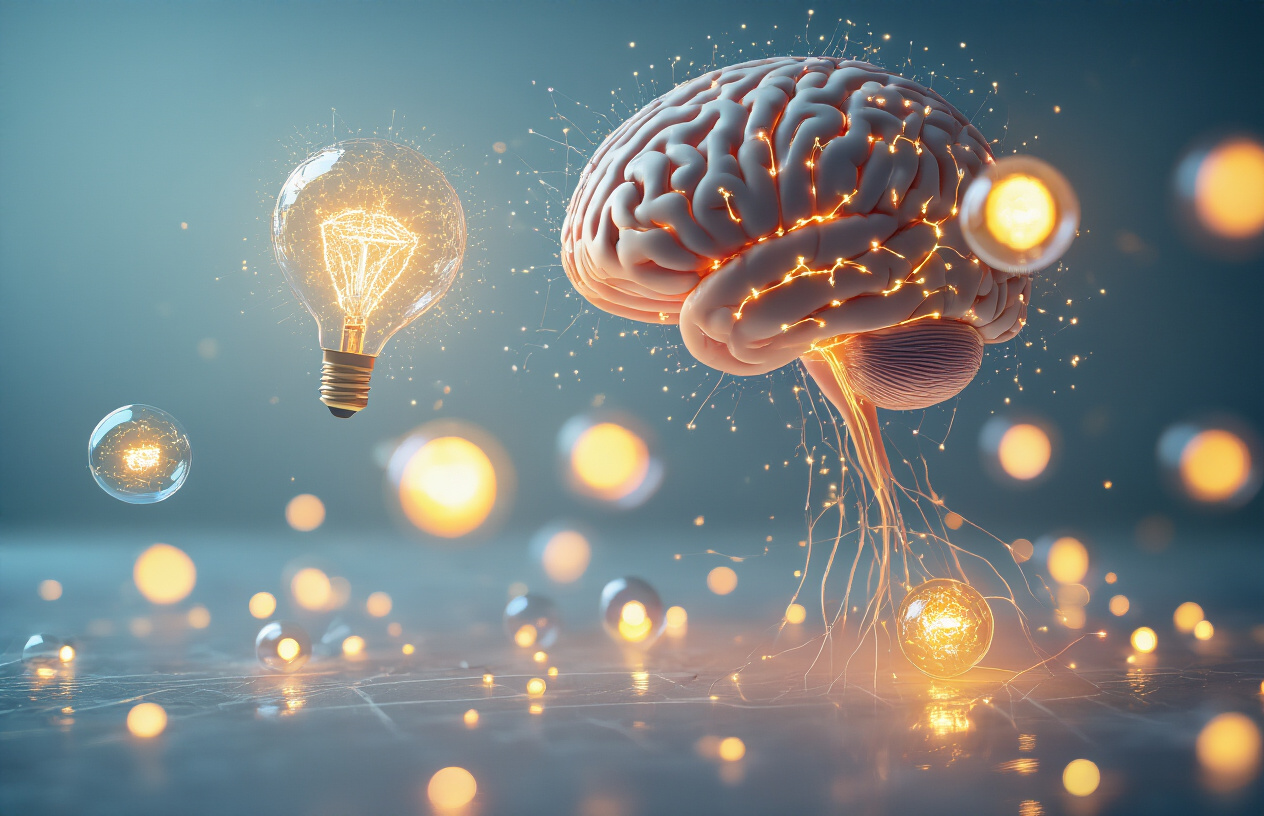
Your brain acts like a sophisticated filtering system, constantly deciding which pieces of information deserve attention and which get discarded. When you encounter a new idea, your mind first checks it against existing knowledge stored in your memory networks. This process happens in milliseconds, long before you’re consciously aware of it.
The prefrontal cortex plays a crucial role here, evaluating novelty and relevance simultaneously. Ideas that are too familiar get ignored as redundant, while concepts that are completely foreign often get rejected as incomprehensible. The sweet spot lies in ideas that contain just enough familiarity to feel accessible, paired with enough novelty to capture attention.
Working memory, your brain’s temporary storage system, can only handle about seven pieces of information at once. This limitation explains why complex ideas often fail to stick – they overwhelm our cognitive capacity. Successful ideas break through this barrier by connecting new information to established mental frameworks, essentially hijacking existing neural pathways to create faster processing routes.
The Role of Emotion in Idea Retention
Emotion acts as your brain’s priority system, tagging certain memories as important and worth preserving. When an idea triggers an emotional response – whether excitement, fear, surprise, or even mild discomfort – it gets processed through the amygdala, which floods the experience with neurochemicals that enhance memory formation.
Ideas wrapped in emotional packaging stick around longer because they activate multiple brain regions simultaneously. The hippocampus, responsible for memory consolidation, works overtime when emotions are involved, creating stronger neural connections that resist fading over time.
Consider how Apple’s “Think Different” campaign didn’t just present product features – it tapped into people’s desire to be unique and rebellious. The emotional resonance made the brand message unforgettable, even decades later. Stories work the same way, which is why narrative-driven ideas often outperform data-heavy presentations in terms of retention and recall.
Fear-based ideas can be particularly sticky, though not always in productive ways. Your brain evolved to remember threats, so concepts framed around potential dangers or losses often grab attention more effectively than those promising benefits.
Pattern Recognition and Mental Models
Your brain constantly searches for patterns, even when none exist. This pattern-seeking behavior stems from evolutionary survival needs – spotting the rustle in bushes that might indicate a predator could mean life or death. Today, this same mechanism helps you quickly categorize and understand new ideas.
Mental models serve as cognitive shortcuts, allowing you to rapidly process information by fitting it into existing frameworks. When someone explains cryptocurrency as “digital money,” they’re leveraging your existing understanding of currency to make a complex concept more digestible. The most successful ideas piggyback on these established models rather than trying to create entirely new categories.
However, mental models can also create blind spots. Ideas that don’t fit neatly into existing categories often get misunderstood or dismissed. Revolutionary concepts frequently struggle because they require people to build new mental frameworks from scratch – a cognitively expensive process that many brains resist.
Pattern recognition also explains why analogies and metaphors are so powerful for idea transmission. When you describe data as “flowing like water through pipes,” you’re connecting abstract information concepts to concrete physical experiences that everyone understands.
Why Some Concepts Feel Instantly Familiar
Certain ideas feel familiar the moment you encounter them, even if you’ve never seen them before. This phenomenon occurs when new concepts align perfectly with your brain’s existing wiring and expectations. These “natural” ideas often reflect universal human experiences, biological drives, or fundamental patterns found throughout nature.
The concept of fairness, for example, resonates across cultures because it taps into deep evolutionary programming around reciprocity and cooperation. Ideas about growth, cycles, and balance feel intuitive because they mirror patterns we observe everywhere from seasons to life stages.
Timing also plays a role in perceived familiarity. Ideas introduced when you’re mentally prepared – perhaps after related experiences or learning – feel more natural than the same concepts presented at random moments. Your brain creates a sense of readiness that makes new information feel like a logical next step rather than a foreign intrusion.
Social proof amplifies this familiarity effect. When multiple people around you embrace an idea, your brain interprets this consensus as evidence that the concept aligns with shared human understanding, making it feel more natural and trustworthy even on first exposure.
Six Core Elements That Make Ideas Unforgettable

Simplicity Beats Complexity Every Time
The human brain craves simplicity. When faced with multiple competing ideas, we naturally gravitate toward the one that’s easiest to understand and remember. This isn’t laziness – it’s evolutionary efficiency at work.
Consider the most successful brands and products around us. Apple’s “Think Different.” Nike’s “Just Do It.” McDonald’s golden arches. These aren’t complex philosophical statements or intricate designs. They’re stripped-down to their absolute essence, making them impossible to forget.
Research shows our brains can only hold about seven pieces of information in working memory at once. When ideas exceed this cognitive limit, we start dropping details. The winners are the ideas that fit comfortably within our mental bandwidth. Southwest Airlines built an entire business model around one simple concept: low-cost flights between point A and point B. While competitors offered complex fare structures and multiple service tiers, Southwest’s simplicity revolutionized air travel.
The beauty of simple ideas lies in their viral potential. They spread effortlessly because anyone can understand and share them without losing meaning in translation. Complex ideas require explanation, context, and often multiple conversations. Simple ideas travel at the speed of conversation.
The Unexpected Captures Immediate Attention
Our brains are prediction machines, constantly anticipating what comes next based on past experience. When reality breaks these patterns, we pay attention. Unexpected elements jolt us out of autopilot mode and force us to engage.
The most memorable advertisements work this way. Think about the commercials you still remember years later. They probably violated some expectation – a talking gecko selling insurance, a caveman offended by a slogan, or a dancing baby selling internet services. These unexpected twists create what psychologists call “prediction error” – a moment when our brain’s expectations don’t match reality.
This principle extends far beyond marketing. Scientific breakthroughs often begin with unexpected observations. Alexander Fleming discovered penicillin because mold contamination in his laboratory produced an unexpected result. The Post-it Note emerged from a failed attempt to create super-strong adhesive that instead produced something surprisingly weak yet useful.
The key isn’t random weirdness. Effective unexpected elements still connect to the core message. They surprise people while simultaneously making perfect sense in hindsight. When Netflix shifted from DVD-by-mail to streaming, it caught everyone off guard. Yet looking back, the move seems inevitable given changing technology trends.
Concrete Details Override Abstract Concepts
Abstract ideas live in the realm of theory. Concrete details live in the world we can touch, see, and experience. When we want ideas to stick, we need to make them tangible.
Consider two ways to describe the same innovation: “We’ve developed a revolutionary transportation solution that leverages sustainable energy sources” versus “This car runs on sunlight and never needs gasoline.” The second version gives you something to picture, while the first remains foggy corporate speak.
Our brains evolved to handle concrete information. We can visualize a red apple sitting on a wooden table much easier than we can grasp “nutritional optimization through natural food selection.” This isn’t just about communication style – it’s about how memory works. Concrete details create multiple pathways to the same information, making recall more reliable.
Successful entrepreneurs understand this instinctively. When Uber’s founders pitched their idea, they didn’t talk about “optimizing transportation networks through mobile technology platforms.” They said “push a button, get a ride.” That concrete image – your finger tapping a phone screen and a car appearing – made the abstract concept of ride-sharing instantly understandable.
The best teachers, speakers, and innovators translate big ideas into small, concrete experiences. They know that one vivid example often accomplishes more than a dozen theoretical explanations. Stories work because they’re concrete. Statistics work when they’re tied to real situations. Abstract concepts work when they’re wrapped in concrete packaging.
The Neuroscience of Innovation and Creativity
How Novel Connections Form in Your Brain
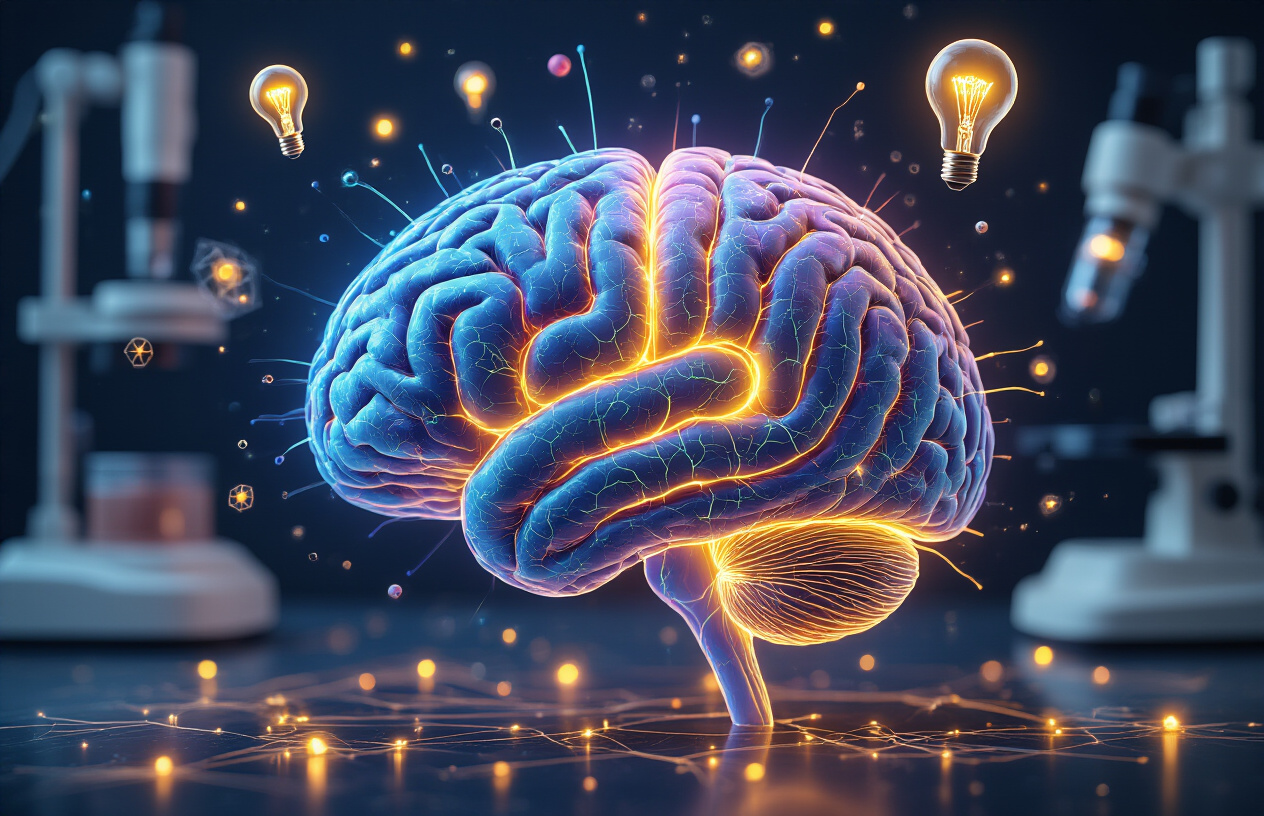
Your brain constantly builds bridges between unrelated concepts, creating the foundation for innovative thinking. This process happens through neural pathways that link different regions of your brain, allowing previously disconnected ideas to merge into something entirely new.
When you encounter new information, your brain doesn’t store it in isolation. Instead, it weaves these fresh inputs into your existing network of knowledge through a process called associative thinking. The hippocampus acts like a master connector, helping your brain find unexpected relationships between memories, experiences, and concepts that might seem completely unrelated on the surface.
Scientists have discovered that creative individuals show stronger connections between brain regions that typically don’t communicate much in average thinkers. Their neural networks demonstrate what researchers call “cognitive flexibility” – the ability to jump between different conceptual categories with ease. This explains why someone might suddenly see how a bird’s wing design could inspire aircraft engineering, or how a musician’s rhythm patterns could improve factory workflow efficiency.
The anterior temporal lobe plays a crucial role in this connection-making process by storing conceptual knowledge and helping your brain access remote associations. When this region becomes highly active, you’re more likely to make those surprising mental leaps that lead to breakthrough ideas.
The Default Mode Network and Breakthrough Moments
Deep within your brain lies a network that becomes most active when you’re not actively focused on anything specific – scientists call this the Default Mode Network (DMN). This network includes regions like the medial prefrontal cortex, posterior cingulate cortex, and angular gyrus, working together during moments of rest and introspection.
The DMN operates like a background processor, continuously making connections and generating insights while you’re daydreaming, taking a shower, or going for a walk. Many breakthrough moments happen when this network is fully engaged, which explains why brilliant ideas often strike when you least expect them.
Research shows that people with more active default mode networks tend to be more creative and generate more original ideas. The network helps your brain combine information in novel ways by allowing different regions to communicate freely without the constraints of focused attention. This free-flowing mental state creates optimal conditions for innovative thinking.
Interestingly, the DMN becomes less active when you’re intensely focused on a specific task. While concentration is essential for executing ideas, the relaxed mental state that activates your default mode network is equally important for generating them. This balance between focused work and mental wandering creates a powerful cycle for innovation.
Why Constraints Actually Boost Creative Thinking
Contrary to popular belief, unlimited freedom often stifles creativity rather than enhancing it. Your brain actually performs better creatively when working within specific boundaries and limitations. This phenomenon, known as the “constraint paradox,” reveals how restrictions can channel your mental energy more effectively.
When faced with constraints, your brain shifts into a more resourceful mode, exploring unconventional solutions and making surprising connections between limited resources. These boundaries force you to think outside obvious approaches and dig deeper into less explored possibilities. A composer limited to three notes might create more innovative melodies than one with access to the entire scale.
Psychological studies demonstrate that people given creative tasks with specific parameters consistently produce more original and practical solutions than those given complete freedom. The key lies in how constraints redirect your attention from infinite possibilities to focused problem-solving within defined parameters.
Different types of constraints affect creativity in unique ways:
| Constraint Type | Creative Impact | Example |
|---|---|---|
| Resource limitations | Forces efficiency and innovation | Creating art with limited materials |
| Time pressure | Accelerates decision-making | Rapid prototyping sessions |
| Format restrictions | Encourages novel approaches | Writing stories in exactly 55 words |
| Audience constraints | Drives targeted solutions | Designing for specific user groups |
The prefrontal cortex, responsible for executive function, becomes more engaged when working within constraints, helping you evaluate options more carefully and make creative choices that might not emerge in an unrestricted environment.
The Science of Aha Moments
That sudden flash of insight when everything clicks into place – the famous “aha moment” – has a distinct neurological signature that researchers can now observe and measure. These breakthrough experiences involve a specific pattern of brain activity that occurs in the seconds leading up to sudden understanding.
About 300 milliseconds before you experience an insight, your brain shows increased activity in the right temporal lobe, particularly in an area called the superior temporal gyrus. This region specializes in making distant semantic connections and plays a key role in understanding metaphors, jokes, and creative solutions. The burst of gamma-wave activity in this area creates the neural conditions necessary for breakthrough thinking.
Scientists have identified two distinct pathways to problem-solving: analytical thinking and insightful thinking. Analytical solutions build step-by-step through logical progression, while insights emerge suddenly when your brain reorganizes existing information into a new pattern. Brain scans reveal that these different approaches activate completely different neural networks.
The moments just before an insight are characterized by decreased activity in the visual cortex, as if your brain temporarily blocks out external distractions to focus on internal processing. Your anterior cingulate cortex, which monitors conflicts and contradictions, also shows heightened activity as it works to resolve the mental tension created by an unsolved problem.
People who experience more frequent aha moments tend to have certain characteristics in their brain activity patterns. They show greater baseline activity in their right hemisphere and demonstrate more flexible attention switching between different mental states.
Sleep and Subconscious Problem Solving
Your sleeping brain doesn’t just rest – it actively works on problems and generates creative solutions through a sophisticated process of memory consolidation and neural reorganization. During sleep, your brain continues processing information from the day and making new connections that can lead to innovative insights upon waking.
REM sleep plays a particularly important role in creative problem-solving. During this stage, your brain experiences increased activity in regions associated with creativity and decreased activity in areas responsible for logical constraints. This creates an ideal environment for your mind to explore unconventional solutions and make unexpected connections between disparate ideas.
Studies reveal that people who sleep on a problem often wake up with better solutions than those who continue working while awake. The sleeping brain reorganizes memories and weakens irrelevant associations while strengthening useful connections. This process helps strip away mental barriers that might prevent you from seeing novel approaches to challenging problems.
Different sleep stages contribute to creativity in unique ways:
- Stage 2 Sleep: Consolidates procedural learning and skill-based knowledge
- Slow-Wave Sleep: Integrates new information with existing knowledge structures
- REM Sleep: Facilitates remote associations and creative insight formation
The glymphatic system, active primarily during sleep, clears metabolic waste from your brain while simultaneously allowing for neural pathway optimization. This biological housekeeping creates space for new connections to form and strengthens the neural circuits most relevant to creative thinking.
Research shows that even brief naps can enhance creative performance, particularly when the nap includes REM sleep. The key lies in allowing your subconscious mind sufficient time to process information without the interference of conscious, logical thinking patterns.
Social Factors That Amplify Idea Adoption

The Power of Stories in Spreading Concepts
Stories transform abstract ideas into memorable experiences that people can relate to and share. When innovators wrap their concepts in compelling narratives, they tap into humanity’s oldest communication method. Think about how Airbnb didn’t just sell room rentals – they sold the story of “belonging anywhere” and connecting with locals. This narrative framework made the concept instantly understandable and emotionally appealing.
Research shows our brains are wired for story processing. When we hear facts and figures, only two areas of our brain activate. But stories light up multiple regions, including those responsible for experiencing the events ourselves. This neural engagement makes story-wrapped ideas stick far longer than dry presentations of features and benefits.
Successful innovators understand that their audience needs to see themselves in the story. The most viral ideas often feature relatable protagonists facing universal challenges. Tesla’s story wasn’t just about electric cars – it was about forward-thinking individuals choosing a sustainable future. This positioning allowed early adopters to see themselves as environmental pioneers rather than simply car buyers.
Stories also provide social proof through shared experiences. When people retell innovation stories, they become part of the narrative themselves, creating a network effect that amplifies adoption far beyond traditional marketing reach.
Credibility and Source Authority Matter
The messenger often matters more than the message when it comes to idea adoption. People evaluate innovations not just on merit, but on who’s presenting them. This explains why unknown entrepreneurs often struggle to gain traction with brilliant ideas, while established figures can launch mediocre concepts to immediate success.
Authority comes in different forms. Expert credibility stems from demonstrated knowledge and track record in relevant fields. Social credibility emerges from peer endorsement and community acceptance. Moral credibility develops through consistent values alignment and authentic behavior.
Smart innovators recognize they might not personally possess the right type of credibility for their target audience. They strategically partner with or recruit advocates who do. When doctors endorse medical innovations, teachers champion educational tools, or respected community leaders support local initiatives, the credibility transfer can accelerate adoption dramatically.
| Credibility Type | Source | Impact on Adoption |
|---|---|---|
| Expert | Industry leaders, researchers | High technical validation |
| Social | Peers, influencers | Reduces perceived risk |
| Moral | Trusted figures, institutions | Builds emotional connection |
The digital age has complicated credibility assessment. Online reviews, social media followers, and viral content can create perceived authority that may not reflect true expertise. Successful innovators navigate this landscape by building authentic credibility across multiple channels while maintaining transparency about their qualifications and limitations.
Timing and Cultural Readiness for Change
Even brilliant innovations can fail if they arrive too early or too late. Cultural readiness acts like soil conditions for seeds – the same idea can flourish or wither depending on societal timing. Video calling technology existed decades before Zoom became essential, but remote work culture hadn’t developed enough to create widespread demand.
Cultural readiness involves multiple layers. Economic conditions influence people’s willingness to try new solutions. Social attitudes determine acceptance levels for different types of change. Technological infrastructure affects implementation feasibility. Political climate can either support or hinder innovation adoption.
Wise innovators read cultural signals to time their launches strategically. They look for:
- Pain points reaching critical mass – Problems becoming widespread enough to motivate change
- Enabling technologies maturing – Supporting systems becoming reliable and accessible
- Generational shifts – Younger demographics bringing different expectations and comfort levels
- Crisis moments – Events that suddenly make new solutions necessary or acceptable
The COVID-19 pandemic perfectly illustrates how external events can instantly shift cultural readiness. Telemedicine, contactless payments, and remote collaboration tools saw years of adoption compressed into months because cultural resistance evaporated overnight.
However, timing isn’t just about external factors. Innovators can actively cultivate cultural readiness through education, demonstration projects, and gradual exposure. They create small wins that build confidence and familiarity, preparing the ground for larger changes when the moment is right.
Practical Strategies for Creating Sticky Innovations

Testing Ideas Before Full Implementation
Smart innovators never bet everything on untested assumptions. The most successful ideas go through rigorous validation before companies invest significant resources. Start with minimal viable prototypes that capture the core concept without burning through budgets. A simple mockup, basic version, or even a detailed presentation can reveal fatal flaws early.
Create small-scale experiments that test specific hypotheses about your innovation. If you’re developing a new app feature, release it to a limited user group first. If it’s a physical product, build functional prototypes and observe how people actually interact with them. Pay attention to what users do, not just what they say they’ll do.
The key is designing tests that provide genuine insights. Ask targeted questions: Does this solve the problem we think it solves? Will people actually change their behavior to use this? What obstacles prevent adoption? Document everything, including the failures—they’re often more valuable than successes for refining your approach.
Building Feedback Loops for Continuous Improvement
Innovation doesn’t stop at launch. The stickiest ideas evolve based on real-world feedback, creating a continuous cycle of improvement that keeps them relevant and valuable. Establish multiple channels for gathering insights from users, stakeholders, and even critics.
Direct feedback comes through surveys, interviews, and user testing sessions. But indirect feedback often reveals more—track usage patterns, monitor social media mentions, and analyze customer support inquiries. This data tells you how people actually experience your innovation versus how you intended it to work.
Create systems that turn feedback into action quickly. Weekly review sessions help teams identify patterns and prioritize improvements. Some companies use rapid iteration cycles, releasing small updates every few weeks rather than waiting for major overhauls. This approach keeps innovations fresh while building stronger connections with users who see their input valued and implemented.
The most successful innovations become collaborative efforts between creators and users. When people feel heard and see their suggestions incorporated, they become advocates who help your idea spread naturally.
Leveraging Existing Mental Frameworks
People accept new ideas faster when they connect to familiar concepts. Instead of forcing audiences to learn entirely new ways of thinking, anchor your innovation to mental models they already understand and trust.
Think about how ride-sharing apps succeeded by connecting to the familiar concept of taxis, or how cloud storage gained adoption by mimicking the desktop folder system. These innovations didn’t require people to abandon everything they knew—they built bridges between the new and the known.
Identify the mental shortcuts your audience already uses. What analogies naturally come to mind when you describe your innovation? What existing processes does it replace or improve? Frame your idea using language and concepts from these familiar domains.
This doesn’t mean dumbing down your innovation. Rather, it means providing cognitive handholds that help people grasp complex concepts quickly. Once they understand the basic framework, you can introduce the unique elements that make your idea special.
Creating Emotional Connections with Your Audience
Logic might convince people your idea works, but emotions make them care enough to adopt and share it. The stickiest innovations tap into fundamental human needs: the desire to belong, to feel competent, to make progress, or to express identity.
Stories work better than statistics for building these connections. Share real examples of how your innovation changes lives, solves frustrating problems, or enables people to achieve something meaningful. Make your audience the hero of these stories, not your product or service.
Visual and sensory elements strengthen emotional bonds. The way something looks, feels, or sounds influences how people perceive its value. Apple understood this when designing the original iPhone—the smooth glass surface and responsive touch interface created an emotional connection before users even explored the features.
Consider the social emotions too. Will using your innovation make people feel smart, creative, or connected to others? Will it help them express their values or identity? The most memorable ideas become part of how people see themselves and want others to see them.

Great ideas don’t just happen by accident. They share common traits that make them impossible to ignore: simplicity that cuts through the noise, unexpected twists that grab attention, concrete details that help us visualize the concept, and emotional connections that make us care. When you combine these elements with the social proof of others believing in the idea, you create something powerful that spreads naturally from person to person.
The most successful innovators understand that the human brain craves stories, patterns, and connections. They know how to package their breakthroughs in ways that stick in our memory and inspire action. Start applying these principles to your own ideas today – strip away the complexity, add a surprising element, make it visual, and connect it to what people already care about. Your next big idea might just be one sticky element away from changing the world.