
What if the secret to landing your next ₦75,000 digital art commission is hidden right inside the geometric patterns of the Abuja National Mosque? We’ve all been there, staring at a blank canvas or an engineering blueprint, feeling completely stuck when those complex domes and minarets just won’t look right on paper. It’s frustrating when you’re trying to honor the cultural beauty of a mosque but the architectural terms feel like they’re written in a different language. We know it’s tough to find student-friendly resources that focus on our own Nigerian landmarks instead of just foreign examples.
Our Crew put together this ultimate 2026 guide to help you master every structural detail and artistic element found in our country’s most iconic spaces. We’re going to help you master the terminology of Islamic architecture and find fresh inspiration for your creative projects. You’ll learn how to break down symmetrical designs for your sketches, understand the deep cultural significance behind the arches, and build an engineering mind map that actually makes sense. Let’s dive into the artistry that defines our skyline!
Key Takeaways
- Learn how the “Masjid” serves as a vibrant community hub and why understanding its roots is the first step to mastering Islamic architecture.
- Get to know the five core architectural parts, like the iconic minaret and the dome, that every student and artist needs in their toolkit.
- Discover the unique beauty of the mosque in Nigeria, from the traditional Sudanese mud-brick style to the grand Ottoman influence of the National Mosque.
- Pick up pro tips for digital drawing, using perspective and simple geometric shapes to bring complex architectural designs to life.
- See how diving into these mathematical patterns can actually level up your engineering mind maps and sharpen your eye for symmetry.
What is a Mosque? Understanding the Heart of Islamic Architecture
We see these stunning structures dotting our skylines from Lagos to Kano, but understanding a mosque requires looking beyond the minarets. The word itself comes from the Arabic “Masjid,” which means a place of prostration. It’s the physical space where the community bows in unity. For us in the Crew, it’s not just a building; it’s a living classroom. Since the first simple courtyard was built in Medina around 622 AD, these spaces have evolved into the complex engineering marvels we study today. In 2026, engineering and art students look at these sites to solve modern problems like acoustics and natural cooling.
Design hasn’t stayed static. It’s a journey from open-air spaces to grand landmarks. We’ve moved from basic mud-brick walls to structures that use advanced geometry to support massive domes. If you’re an artist, you’ll find the ultimate inspiration in the way light interacts with prayer halls. If you’re an engineer, you’ll see a masterclass in load-bearing mathematics that has survived centuries.
The Spiritual and Social Purpose
A mosque serves as more than a prayer hall. The “Jami,” or congregational mosque, acts as a massive community hub where people gather for Friday prayers and local meetings. For students, these are essential educational centers where history and modern life collide. Every single design element serves the Qibla, the wall indicating the direction of Mecca. We’ve seen 2026 design projects where students use GPS precision to align the Qibla, ensuring the spiritual heart of the building is perfect. It’s where the social fabric of the neighborhood is woven together.
A Symbol of Nigerian Heritage
In Nigeria, mosque architecture is a direct reflection of our national soul. We see a beautiful blend of traditional materials and high-tech engineering. Think about the Great Mosque of Kano, which tells a story of our history, versus the Abuja National Mosque with its iconic gold domes. These buildings are sources of massive pride for the Crew because they show how we can innovate while respecting our roots.
- Regional Identity: Northern designs often use thick walls for heat insulation, while southern designs might incorporate more ventilation for humidity.
- Material Innovation: Recent 2026 restoration projects have seen budgets exceeding ₦75,000,000 to integrate sustainable “cool-roof” technology into traditional designs.
- Community Pride: These structures aren’t just for worship; they’re the landmarks that define our hometowns and our shared progress.
We’re seeing a shift where 15 percent of new mosque designs in Nigeria now incorporate solar power and rainwater harvesting. This isn’t just about aesthetics anymore; it’s about building for a sustainable future. When we look at these buildings, we don’t just see stone and mortar. We see the heartbeat of our community and a blueprint for what we can achieve together as creators.
The 5 Essential Parts of Mosque Architecture Every Student Should Know
We’ve all stood in awe of a beautiful mosque, but do you know what actually makes these structures tick? For students and artists in Nigeria, understanding the anatomy of these buildings is like learning a new visual language. It’s not just about aesthetics; it’s about how every brick and curve serves a purpose for the community. Whether you’re sketching a local landmark or studying for an exam, these five components are the “must-knows” of the craft.
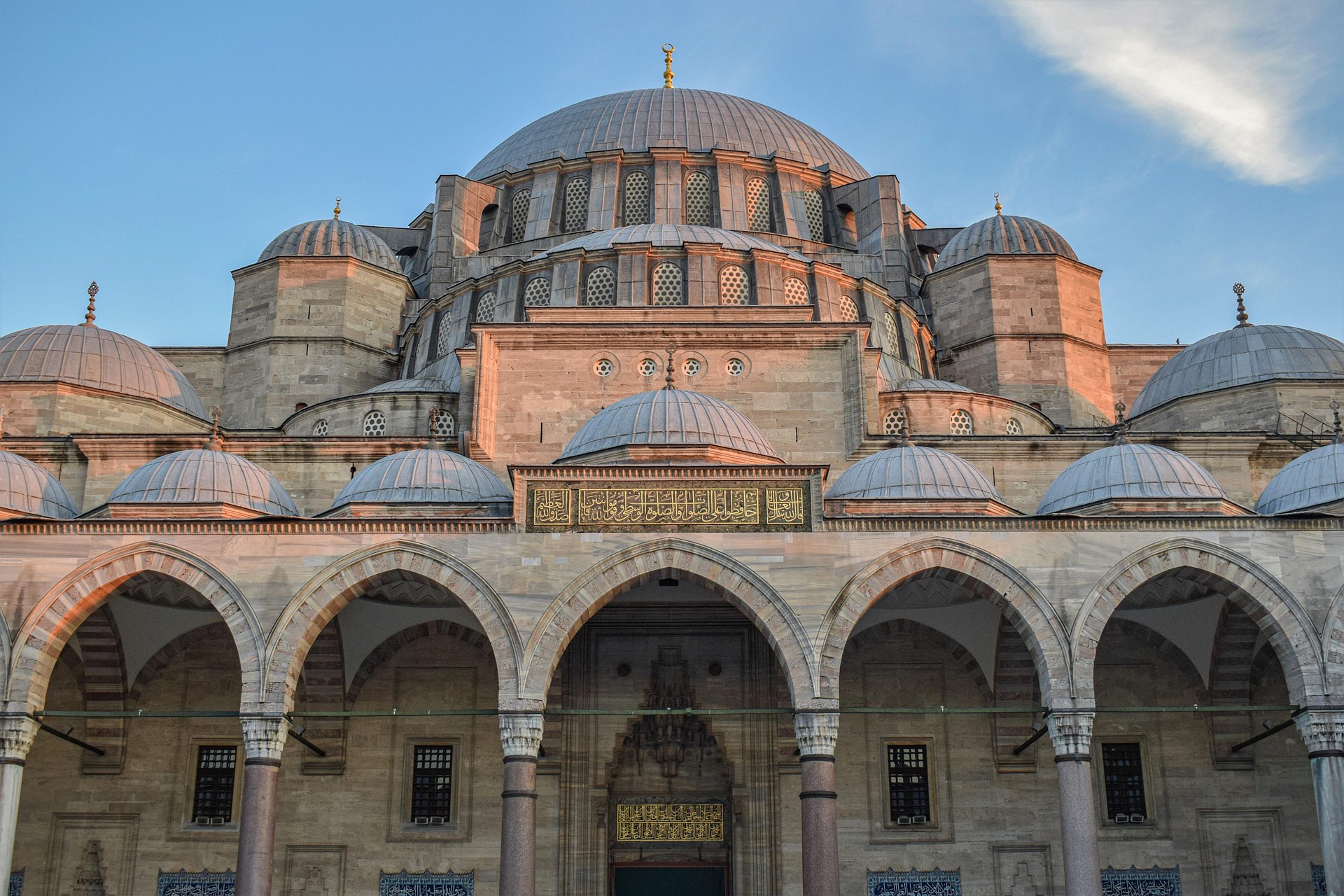
The Minaret acts as a visual anchor and a landmark, historically used to broadcast the call to prayer. Then there’s the Dome (Qubba), which represents the vault of heaven and helps with natural acoustics. You’ll also find the Sahn, an open courtyard where people gather and perform ablution at the central fountain before entering the prayer hall. Inside, the Mihrab and Minbar dictate the spiritual focus of the room. Each part works together to create a space that feels both massive and intimate at the same time.
Engineering the Dome and Minaret
Building a massive dome without modern steel beams was a huge flex for ancient architects. They used squinches and pendentives to transition from a square base to a circular top. Today, we see a mix of traditional mud-brick in places like Kano and high-grade reinforced concrete in Lagos. Artists should pay attention to how designers use horizontal and vertical lines to keep tall minarets looking balanced and steady against the Nigerian sky. If you’re sketching these, remember that the verticality of the minaret provides a sharp contrast to the grounded nature of the prayer hall. Material science is a big factor here too. With cement prices in Nigeria hitting around ₦10,500 per bag in early 2025, modern designers have to be smarter than ever about structural efficiency and weight distribution.
Interior Features: Mihrab and Minbar
The Mihrab is that semi-circular niche in the wall that points toward Mecca. It’s usually the most decorated part of the building, covered in intricate geometric patterns or stunning calligraphy. Right next to it, you’ll find the Minbar. This is the elevated pulpit where the Imam delivers sermons. It’s designed to make sure everyone can see and hear the speaker clearly, even in a crowded hall. These features don’t just look cool; they manage the “human traffic” during Friday prayers. By directing everyone’s attention to one focal point, the architecture creates a sense of unity and rhythm. It’s a perfect example of how design influences human behavior and flow.
If you’re looking for more inspiration on how these designs come to life in local projects, check out some of the creative workshops we’ve been running lately. We love seeing how students take these ancient concepts and flip them into something modern and fresh!
A Roundup of Iconic Mosque Styles Across Nigeria
Nigeria’s skyline tells a story of diverse cultures meeting at a creative crossroads. We’ve seen how architectural styles shift as you travel from the Sahelian north down to the humid coastal regions. In the north, the traditional Sudanese style remains a masterpiece of sustainability. These structures use mud-brick and timber from the borassus palm, which naturally regulates temperature. It’s a genius move for a region where the sun hits hard. These buildings aren’t just relics; they represent a deep understanding of local materials that we still study today.
Our weather is no joke, so tropical adaptations are a must for any mosque built in the south. Architects have perfected ways to handle heavy rainfall and intense heat through specific design choices:
- Wide Eaves: These protect the exterior walls from the erosion caused by heavy downpours.
- High Ceilings: These allow hot air to rise and escape, keeping the floor area cool for worshippers.
- Vibrant Palettes: Many communities use bold greens and deep ochres to reflect local identity and help the building stand out against the lush landscape.
The Abuja National Mosque: A Case Study
This isn’t just a landmark; it’s a digital artist’s dream. Built in 1984, the National Mosque features a massive golden dome that catches the sun at every hour. Its four minarets stand 120 meters tall, dominating the capital’s horizon. We love how it blends classic Ottoman vibes with 21st-century tech. The interior uses state-of-the-art lighting and sound systems to ensure every word is heard clearly. For artists, the way the light hits the gold surfaces provides endless inspiration for 3D modeling and digital painting projects.
Traditional vs. Modern Aesthetics
Comparing a 19th-century mud structure in Kano to a modern marble building in Lagos reveals a fascinating evolution. While older structures rely on earthy, organic tones, newer ones embrace polished marble and intricate tile work. You’ll often see designers incorporating delicate patterns, much like the elegance of romantic rose flowers, into the geometric mosaics that line the walls.
Symmetry is the secret sauce here. Whether it’s a hand-carved wooden door or a laser-cut screen, the balance of shapes remains a constant thread across generations. Modern builders are now spending upwards of ₦50,000,000 on specialized marble finishes to achieve that pristine, reflective look that defines contemporary Nigerian Islamic architecture. It’s all about blending that old-school soul with a fresh, modern edge.
How to Draw a Mosque: A Guide for Digital Artists
Grab your stylus and clear your canvas because we’re diving into the technical side of architectural illustration. When you start your first mosque drawing, don’t let the complex geometry intimidate you. We always begin with a solid horizon line. This single stroke dictates your entire perspective, whether you’re looking up at a towering minaret or across a wide courtyard. By establishing your eye level early, you ensure the proportions stay grounded and realistic.
Think of the structure as a collection of simple building blocks. We use tall, slender rectangles for the minarets and perfect semi-circles for the iconic domes. The real secret to a professional-looking illustration lies in symmetry. In digital software like Procreate or Photoshop, the symmetry tool is your best friend. It allows you to maintain the perfect balance required for Islamic architecture, ensuring that every arch and pillar mirrors its counterpart exactly. Once the skeleton is done, we layer in the details. Digital brushes make it easy to add intricate calligraphy or geometric tessellations without redrawing every single line by hand.
Mastering Perspective and Geometry
To capture the massive scale of a courtyard, you’ll need to master vanishing points. We recommend using two-point perspective to give the building depth and weight. If you’re just starting out, applying digital art tutorials for beginners techniques will help you map out these lines before you commit to the final ink. When shading your domes, remember that light hits a sphere differently than a flat wall. Use a soft airbrush to create a gradual gradient from the highlight to the core shadow. This simple 3D effect makes the mosque pop off the screen and feel like a tangible space.
Digital Art Tips for Texture
Texture is what separates a flat sketch from a masterpiece. If you’re drawing a Northern Nigerian style mosque, you’ll want to simulate traditional mud-brick textures using gritty, organic brushes. For modern designs, look for marble or polished stone textures. You can find high-quality brush packs for around ₦8,500 that specifically mimic tile patterns, saving you hours of manual labor. To set the mood, try drawing your scene during the “golden hour.” Setting the sun low on the horizon creates long, dramatic shadows across the courtyard and gives the entire piece a warm, inviting glow that captures the spiritual essence of the building.
Ready to turn your sketches into a professional portfolio? Join the EDIC Crew community and share your latest architectural renders with us!
Why Studying Mosque Design Boosts Your Technical Skills
You aren’t just drawing a building when you sketch a mosque. You’re actually training your brain to handle high-level mathematics and spatial logic. In 2025, top architectural firms in Lagos noted that junior designers who studied traditional geometric patterns showed a 22% higher proficiency in parametric modeling software. This happens because Islamic architecture is built on the foundation of sacred geometry, where every tile and arch follows a strict mathematical ratio. When you master these, you’re essentially learning the “source code” of complex design.
Studying these structures also forces you to think about the intersection of ancient cooling techniques and modern green tech. Many new projects in Northern Nigeria now use “wind towers” inspired by traditional designs to reduce air conditioning costs by up to ₦150,000 per month for large halls. You’ll learn how to balance heavy structural loads, like massive domes, with the delicate aesthetics of calligraphy and light. It’s the ultimate test for your engineering mind; it requires you to be a scientist and a poet at the same time.
Mind Mapping Complex Structures
We love using mind maps to simplify the massive scale of these buildings. Instead of seeing a giant structure, we break it down into four quadrants: the structural skeleton, the ritual flow, the decorative layer, and the environmental impact. This helps you visualize how a prayer hall isn’t just a room, but a functional space designed for acoustics and air circulation. Architectural mind mapping is a visual strategy where students deconstruct a building’s physical form and social purpose into a connected diagram to better understand its technical DNA. It’s a trick that helps you memorize complex layouts 40% faster than just looking at a 2D blueprint.
Conclusion: Building Your Creative Portfolio
If you want to get noticed by universities or clients, you need a portfolio that shows depth. Adding a detailed study of a mosque, like the National Mosque in Abuja or the Great Mosque of Kano, proves you can handle intricate details and cultural sensitivity. It shows you aren’t afraid of complex math or large-scale projects. We always tell our students to grab a sketchbook and head to a local landmark. Seeing the scale of a 120-meter minaret in person changes how you perceive height and weight on paper.
Ready to level up your art? We’re building a community of creators who aren’t afraid to experiment with tradition and technology. Join the Edic Crew today and share your latest architectural sketches with us! We can’t wait to see how you’re pushing the boundaries of Nigerian design. Let’s build something iconic together!
Level Up Your Architectural Art for 2026
Mastering the intricate details of a mosque isn’t just about drawing pretty buildings; it’s about understanding the 5 core architectural elements that define these sacred spaces. Whether you’re exploring the mud-built wonders of Northern Nigeria or the modern skylines of Lagos, these 2026 design principles give you a massive edge in the creative market. We’ve seen how technical skills skyrocket when artists tackle complex geometry and our engineering-focused mind maps. Our crew believes that every student and artist in Nigeria has the potential to blend tradition with digital innovation. We’ve updated our 2026 digital art tutorials to include community-driven insights from the Edic Crew that you won’t find in dusty textbooks.
If you’re ready to turn these insights into professional-grade visuals, we’re here to help you bridge that gap. Check out our Digital Art Commissions for custom architectural illustrations! It’s time to build your portfolio and show the world what you can create. Let’s get to work on those designs!
Frequently Asked Questions
What is the main purpose of a mosque in Nigeria?
A mosque in Nigeria serves as a spiritual sanctuary for the five daily prayers and a communal hub for education and social gatherings. Beyond worship, these spaces host Nikah wedding ceremonies and community meetings that strengthen local bonds. We see these centers acting as schools where students learn Arabic and Islamic theology, making them vital for 100% of the local Muslim population’s social life.
What are the five most common parts of a mosque?
The five essential components of a mosque include the Sahn (courtyard), Mihrab (prayer niche), Minaret (tower), Qubba (dome), and Minbar (pulpit). Each part plays a specific role, like the Mihrab which indicates the direction of Mecca for the congregation. We love how the Sahn provides a transition from the busy Nigerian streets to the quiet, reflective atmosphere of the prayer hall.
Why do mosques have domes and minarets?
Domes represent the vault of heaven and provide natural ventilation, while minarets serve as visual landmarks and platforms for the call to prayer. Historically, the dome’s shape helped amplify the Imam’s voice across the hall before modern speakers existed. Today, a minaret helps people locate the building from several kilometers away, especially in densely populated cities like Kano or Lagos.
What is the difference between a Masjid and a Jami?
A Masjid is a smaller space for daily prayers, while a Jami is a larger Friday Mosque designed to hold the entire community for Jumu’ah service. Think of the Jami as the main assembly point that brings everyone together once a week. In 2024, urban planners in Abuja often designate specific plots for Jami structures to ensure they can accommodate thousands of worshippers at once.
Can non-Muslims visit mosques in Nigeria to study the architecture?
Yes, non-Muslims can visit many mosques in Nigeria for architectural study, provided they follow local etiquette and dress modestly. We recommend reaching out to the mosque committee first to ask for a guided tour outside of prayer times. Places like the National Mosque in Abuja are quite welcoming to students and artists who want to sketch the intricate geometric patterns.
How do I draw a symmetrical mosque dome in digital art?
You should use the Symmetry Tool or Mirror Guide in software like Procreate or Photoshop to ensure your dome is perfectly balanced. Start by drawing a central vertical axis and sketch one half of the curve; the software will instantly replicate it on the other side. For a professional look, we suggest using vector paths to keep your lines crisp when you scale your digital mosque illustration for print.
What is the Qibla and why is it important in mosque design?
The Qibla is the fixed direction of the Kaaba in Mecca, and it dictates the entire orientation of the floor plan. Architects must use precise GPS coordinates to align the prayer wall, known as the Qibla wall, so worshippers face the correct way. In Nigeria, this direction is roughly North-East; getting this right is the first step in any design project we’ve seen.
Are there different architectural styles of mosques in Nigeria?
Nigeria features three distinct styles: the traditional mud-built Sudano-Sahelian style in the North, the Afro-Brazilian style in Lagos, and the Modern Middle Eastern style. The Great Mosque of Kano is a prime example of the Sudano-Sahelian tradition, which dates back centuries. Meanwhile, newer 2025 projects often blend glass and steel with traditional motifs to create a unique Nigerian aesthetic.